 BibleLead
Paphos
Kato Paphos · 바보
Southwest coast of Cyprus
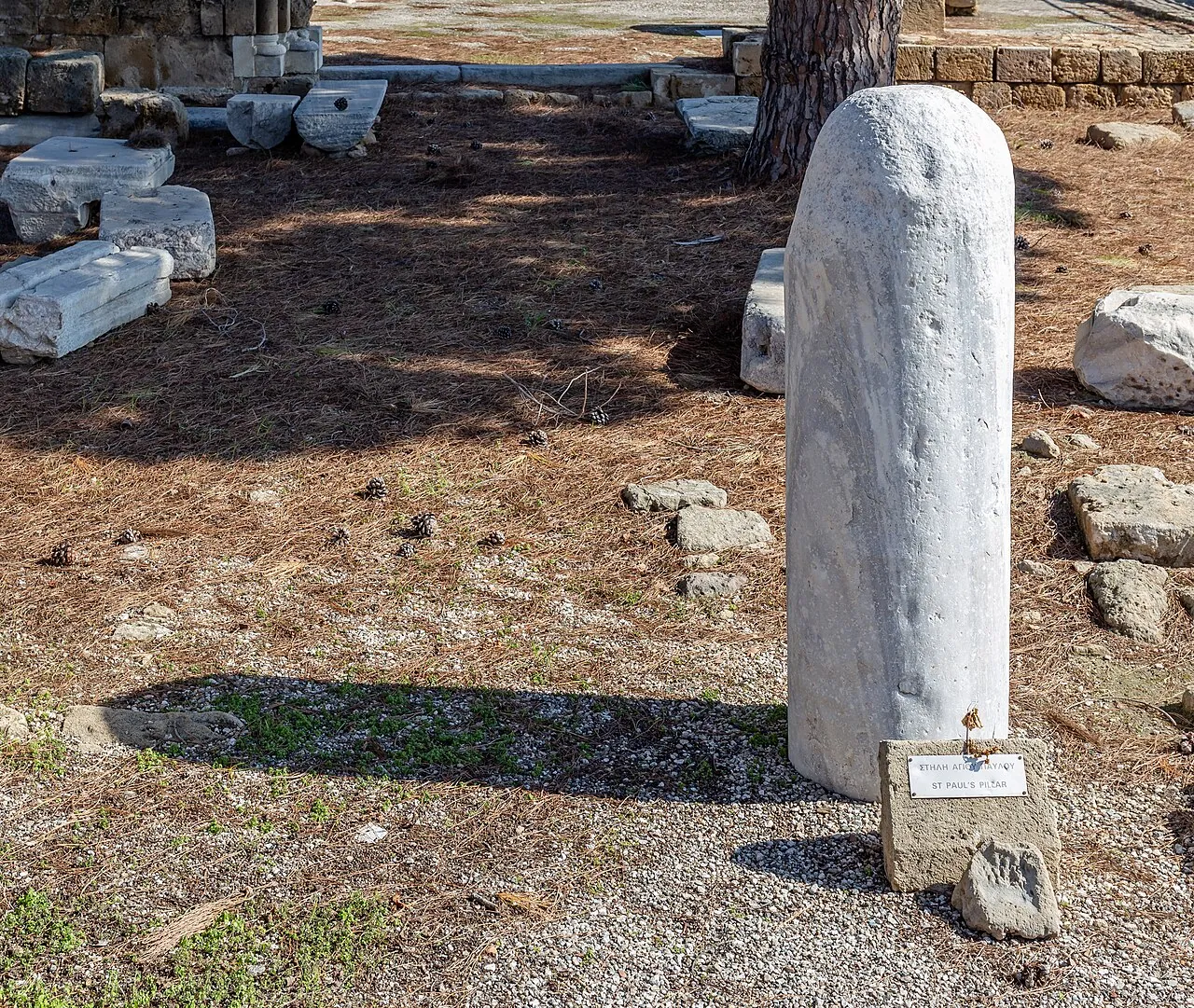
Where the proconsul Sergius Paulus believed. Home of Agia Kyriaki church and Saint Paul's Pillar.
In the Bible
Crossing the island from Salamis, Barnabas and Saul came to Paphos and met a Jewish sorcerer and false prophet named Barjesus. He was with the deputy of the country, Sergius Paulus, a prudent man who wanted to hear the word of God. When Elymas the sorcerer tried to turn him from the faith, Saul, also called Paul, filled with the Holy Ghost, told him he would be blind for a season. Mist and darkness fell on him. The deputy believed, astonished at the doctrine of the Lord. From here the party sailed to Perga.
Scripture King James Version (KJV)
- Acts 13:6-8
6And when they had gone through the isle unto Paphos, they found a certain sorcerer, a false prophet, a Jew, whose name was Bar-jesus: 7Which was with the deputy of the country, Sergius Paulus, a prudent man; who called for Barnabas and Saul, and desired to hear the word of God. 8But Elymas the sorcerer (for so is his name by interpretation) withstood them, seeking to turn away the deputy from the faith.
- Acts 13:9-12
9Then Saul, (who also is called Paul,) filled with the Holy Ghost, set his eyes on him, 10And said, O full of all subtilty and all mischief, thou child of the devil, thou enemy of all righteousness, wilt thou not cease to pervert the right ways of the Lord? 11And now, behold, the hand of the Lord is upon thee, and thou shalt be blind, not seeing the sun for a season. And immediately there fell on him a mist and a darkness; and he went about seeking some to lead him by the hand. 12Then the deputy, when he saw what was done, believed, being astonished at the doctrine of the Lord.
- Acts 13:13
Now when Paul and his company loosed from Paphos, they came to Perga in Pamphylia: and John departing from them returned to Jerusalem.
The site today
Paphos was the seat of Roman government on Cyprus. Near the harbor of today's Paphos, an archaeological park preserves mosaic floors from Roman villas and a small odeon. To the north, the Tombs of the Kings are Hellenistic burial chambers cut into the rock. The area became a UNESCO World Heritage Site in 1980. The church of Agia Kyriaki was built around the 13th century over the ruins of a large 4th century basilica. In its courtyard stands Saint Paul's Pillar, where tradition says Paul was scourged.